llms.txt and Structured Data for AI Search in 2026
AI crawlers read your site differently than humans. Learn how llms.txt, Schema.org structured data and E-E-A-T make your website easy for ChatGPT, Gemini and AI Overviews to understand and cite.
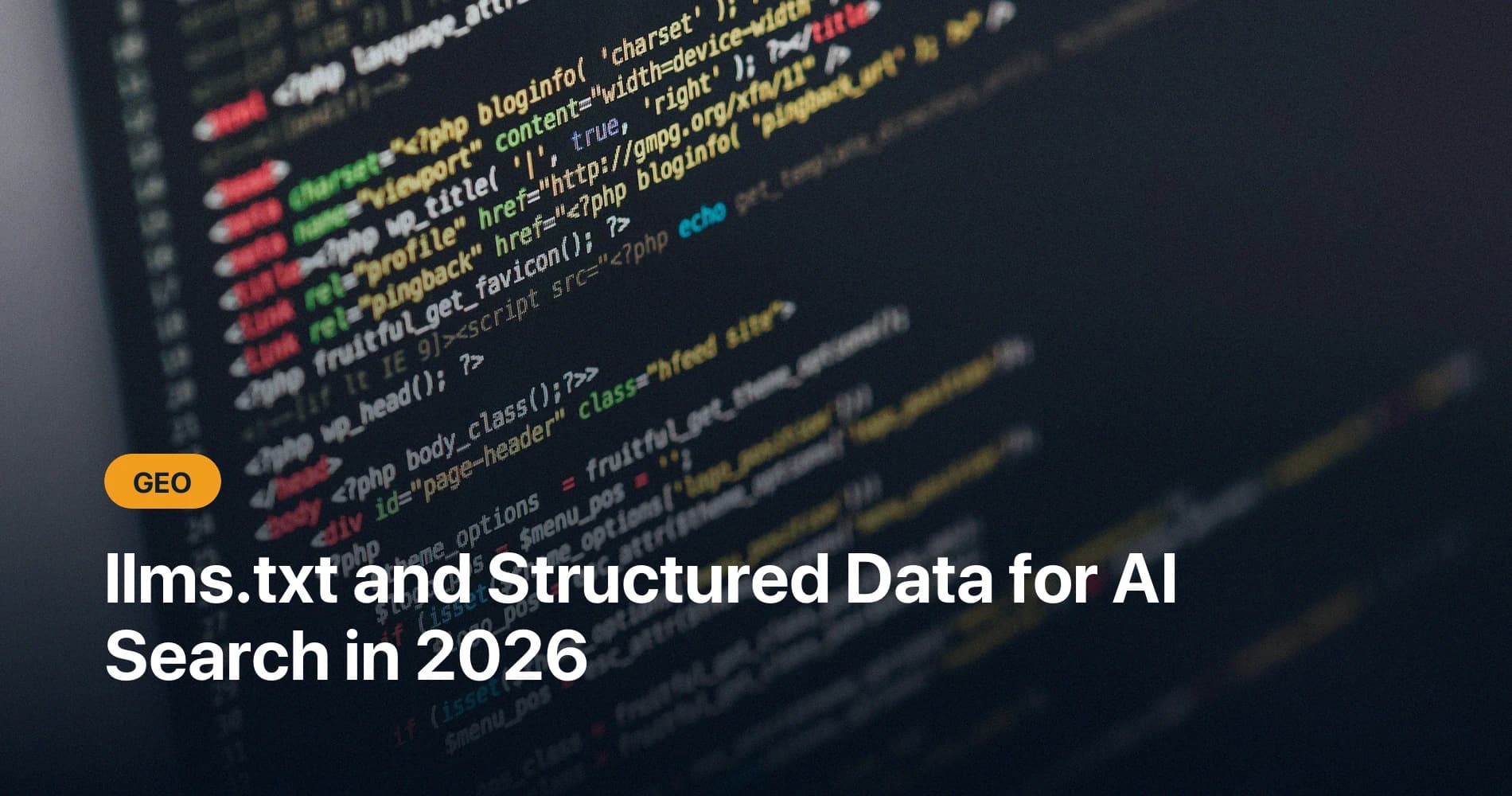
Search has changed. People no longer just type keywords into Google and click blue links — they ask ChatGPT, Gemini, Perplexity and Google's AI Overviews full questions and expect a synthesized answer. And here's the catch: AI crawlers don't read your website the way a human visitor does. They don't admire your hero animation or your clever menu. They parse text, structure and signals of trust — fast — and decide whether your content is clear enough to understand, quote and cite.
If your site isn't built to be machine-readable, you can have the best service in Punta Cana and still be invisible to the AI engines your future clients are using.
At The Agenzzy we build the technical foundations that make a site legible to both Google and AI. This guide walks through the three pillars: llms.txt, structured data and E-E-A-T — and why getting them right serves traditional SEO and GEO/AEO at the same time.
Why AI crawlers struggle with normal websites
A modern website is built for humans: visual hierarchy, motion, imagery. But a language model ingesting your page wants the opposite — clean, semantic, well-labeled content it can extract with confidence.
Common problems that make a site hard for AI to read:
- Content rendered only by JavaScript. If the meaningful text appears only after client-side rendering, some crawlers see an empty shell. Ship crawlable HTML.
- No clear structure. Without semantic headings (
<h1>,<h2>), proper URLs and labeled sections, the model has to guess what your page is about. - Missing context about who you are. AI engines favor sources they can identify and trust. If there's no clear signal of authorship, location or authority, you get skipped.
The fix isn't a gimmick. It's three foundations that work together.
Pillar 1: llms.txt — a curated index for language models
llms.txt is a community proposal: a single markdown file placed at the root of your site (/llms.txt) that gives large language models a clean, human-readable map of your most important content. Think of it as a curated table of contents written for AI — pointing it straight to the pages that matter, without forcing it to crawl your entire site.
A few things to be clear about:
- It complements, it doesn't replace,
robots.txtandsitemap.xml. Those control access and list URLs;llms.txtadds curated, readable context. - It's a community proposal, not yet an official Google standard — but adoption is growing steadily across documentation sites, SaaS products and agencies.
- It's plain markdown, so it's trivial to maintain. (At The Agenzzy, we already publish our own
llms.txt.)
A minimal example looks like this:
# The Agenzzy

> Creative studio and web development agency in Punta Cana, Dominican Republic.
> Bilingual branding, web design and digital marketing for Caribbean businesses.

## Services
- [Web Design](https://theagenzzy.com/services/web-design): Fast, SEO-ready Next.js websites.
- [Branding](https://theagenzzy.com/services/branding): Identity systems for growing brands.

## Resources
- [Blog](https://theagenzzy.com/news): Articles on SEO, GEO and design.
A short # title, a > summary describing what you do, then sections of markdown links to your key pages. That's it — and it gives the model a confident starting point.
Pillar 2: Structured data with Schema.org
If llms.txt is the map, structured data is the labeling system for everything on the map. Schema.org markup — usually written as JSON-LD in your page's <head> — describes the meaning of your content in a vocabulary both Google and AI engines understand.
Instead of leaving a crawler to infer that "Punta Cana" is a location and "+1-809..." is a phone number, you tell it explicitly. This powers Google rich results (star ratings, FAQ dropdowns, breadcrumbs) and lets AI extract facts about your business with far more confidence.
The schema types worth implementing:
- Organization / LocalBusiness — who you are, where you are, how to reach you.
- Article / BlogPosting — for editorial content like this post.
- FAQPage — questions and answers, often surfaced directly in AI answers.
- BreadcrumbList — your site hierarchy.
- Product / Service — for what you sell.
Here's a minimal, valid Organization block:
{
  "@context": "https://schema.org",
  "@type": "Organization",
  "name": "The Agenzzy",
  "url": "https://theagenzzy.com",
  "description": "Creative studio and web development agency in Punta Cana.",
  "address": {
    "@type": "PostalAddress",
    "addressLocality": "Punta Cana",
    "addressCountry": "DO"
  }
}
That tiny block turns ambiguous text into structured facts a machine can quote without guessing.
Pillar 3: E-E-A-T — the trust layer
You can be perfectly machine-readable and still get ignored if the engines don't trust you. That's where E-E-A-T comes in — Google's quality framework standing for Experience, Expertise, Authoritativeness and Trust. AI engines lean heavily on the same signals when choosing which sources to cite.
What actually moves the needle:
- Real authorship. Name the humans behind your content; vague "admin" bylines hurt.
- Cited sources and original data. First-hand experience and references beat recycled fluff.
- Reviews and reputation. Genuine client reviews and consistent mentions build authority.
- Brand consistency. The same name, logo and details across your site, profiles and listings.
- Technical trust. HTTPS, visible contact info, a real address, working links.
AI models are trained to favor authoritative, well-cited sources — so E-E-A-T isn't a soft "nice to have." It's a ranking and citation factor.
The technical hygiene that ties it together
These pillars only pay off on a healthy site. Cover the basics:
- Crawlable HTML — make sure your real content exists in the markup, not only after JavaScript runs.
- Core Web Vitals — speed and stability help rankings and keep crawlers happy.
- Semantic URLs and headings — clean structure tells engines how your content is organized.
- Correct sitemap and canonical tags — point crawlers to the right version of each page.
- Descriptive alt text — images become readable context instead of dead weight.
The best part: none of this is "AI-only" work. Every one of these foundations also improves your traditional Google ranking. You're not building two strategies — you're building one solid base that serves SEO and GEO/AEO simultaneously.
The bottom line
AI search isn't replacing your website — it's reading it harder than ever. llms.txt hands the model a curated map, structured data labels everything on it, and E-E-A-T tells the engines you're worth citing. Together they turn an opaque, human-only site into a source AI engines can understand, trust and recommend.
If you're not sure how machine-readable your site is today, our web design service covers the full technical foundation — and our free AI guide walks you step by step through getting recommended by ChatGPT, Gemini and AI Overviews.
Build the foundation once. Get found everywhere.